ArtSure is basically a register of prints that meet the Fine Art Trade Guild's highest standard for printing. All prints that meet the criteria are given an individual registration number and can be viewed on the ArtSure section of the Fine Art Trade Guild's website: http://www.fineart.co.uk/artsure/
The benefits for the Artist are that the registration establishes the quality of the prints and differentiates them from all the 'cheap' reproductions on the market today. It also reassures their buyers that the print is going to last and remain a faithfully reproduction of the original. There's an additional but not stated benefit for the Artist; it establishes the date of the work - important for copyright.
The benefit for the buyer is mainly that they can be sure the print they've bought won't fade or discolour, and it'll hold a realistic value. It will also sit comfortably in a frame with no 'cockling' or distortion over time. But the biggest benefit is that it will look good, so good that you'll think it was the original!
Monday, 27 June 2016


Friday, 19 February 2016
 Can you print from any picture file?
Technically yes. But the quality of a print is dependent of the quality and resolution of the image file. Many images are captured at ‘screen resolution’ - 72dpi.To achieve a good print you need an image of 240-360dpi. There can also be problem with images shot as JPEGs and heavily compressed to make the file smaller, this reduces the overall quality of the image and colour detail.
Wednesday, 17 February 2016

Tuesday, 16 February 2016
Friday, 29 January 2016

Wednesday, 25 February 2015

The Limited Edition dilemma…
Being the first person many artists speak to when they embark upon the idea of selling prints, I get asked a lot of questions. One that often crops up is, “Should I do Limited Editions?” Quickly followed by, “What’s the difference with an Open Edition?” As we know, Open Editions, signed or not, have no limit on how many copies are produced, whereas Limited Editions limit the number and the sizes. So how did the ‘Limited Edition’ come about? Well, in the past, the first prints of a run were generally sharper and better balanced for colour. Traditional printing methods relied on plates that wore out over time and the printer often took more care with the amount of ink and it’s spread at the beginning of a run, as these were the ones the client would ‘approve’. By limiting an edition a degree of quality was assured. In fact the first few prints were considered to be the best quality and often commanded a higher price. So, the ‘Limited Edition’ was a quality statement and differentiator from ‘mass produced’ prints of varying quality.
Today, with giclée printing, quality is not an issue, there is no degradation of quality over the printing life of a run. The ‘Limited Edition’ is still considered as more of a premium price label for prints, but do Limited Editions actually command a higher price? It’s all down to marketing and making the buyer think there’s something unique about the Limited Edition. But here’s the rub, by limiting a print run the artist is also limiting the amount of return they can get from their work. Who knows how many they could sell if a print proves to be popular, particularly now the market is going global. And, how long could they continue to sell the print - we’re still buying prints of work by artists from previous centuries!
Other questions are, “Who controls the Limited Edition”, and “Does it matter if I issue two number ’12’s by mistake?” In the later case there are two things an artist must consider; first their reputation and the trust enjoyed with their buyer’, and secondly the legal issue. When you sell a Limited Edition print you enter into a ‘contract’ with the buyer, based on the description of what you’re selling. If you state the print is number ’12’ of a Limited Edition of 50, then that’s what it has to be. To do otherwise is like selling a 2005 car, but claiming it was produced in 2008, they call it “passing off” and the buyer can take action against you.
On a more practical note, I wonder how many Framers cover over the edition number with the mount - usually at their clients request, so there’s no ‘white space’? Plus, you’ve got a problem with canvas prints, there’s no easy way to number these?
We’re also in a changing market, where prints are chosen not only because the buyer likes the image, but also because it compliments the theme of the room they’ve chosen it for. However when they change the curtains, sofa or home, they require a different image. Yes, we’re now in a ‘disposable world’, but fortunately, the odds are that consumers today will purchase a lot more art in their lifetime, but it could be prints rather than originals.
So is the ‘Limited Edition’ still valid; do you actually make more money from selling ‘Limited Editions’; or is it now far too limiting from an artist’s point of view?
John Roland - Salt of the Earth
Originally published in 'Art Business Today' - the journal of the Fine Art Trade Guild
Thursday, 8 May 2014
Is it time to rethink Art?
Well, not art itself, but the roll it has in people’s lives. Yes, we can all view wonderful art in galleries and museums, but it’s the art in people’s homes that affects most artists. Art sells to people, not museums. And it’s here we have to consider the changing value of art to the homeowner.
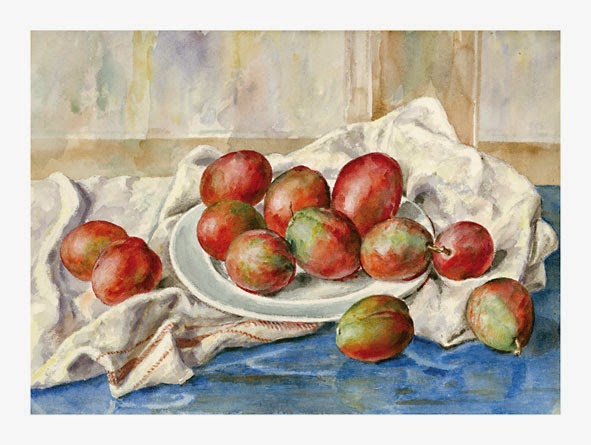
Why do they buy art? Well, except for the ones who see it as an investment, most want it to enhance their homes - to decorate their walls. Unlike art collectors of old, who kept buying until their walls were full, today’s buyer needs pictures or a piece of art to complete their current interior ‘look’, and this change in lifestyle means we need to rethink the roll of art.
Most people will live in more than one home during their adult life, some might remodel their homes many times over, changing the ‘look’, and the pictures or art to suit their needs or current lifestyle. Here’s where artists need a deep intake of breath because anything that doesn’t ‘fit’ the new look will be discarded. Let’s hope they don’t throw away original artworks, but they will give them away or store them in their loft - often never to be seen again!
So, for the money-earning artist, coming to terms with the fact that their work could only hold a temporary value will need a significant rethink. And this is where the significance of a giclée print comes in because it’s of a lower cost and can instantly be reproduced, it t matters less if it gets thrown away. In fact, it creates a whole different business model for the artist; the original artwork then becomes the means to produce the prints, which can be reproduced as many times as there are buyers, and the original can be kept or sold when the popularity of the prints has raised its value. Many artists now view the originals as their ‘pension fund’.
But it does mean that the artist needs to ‘invest’ in the scanning and reproduction from the start and not wait until the original sells in order to pay for it. The other advantage of majoring on prints is that there’s an ‘asset value’ that can be handed down. The prints could continue to sell long after the artist has ceased to produce new works.
Prints don’t devalue original artwork, they enable more people to enjoy it.
Subscribe to:
Posts (Atom)